
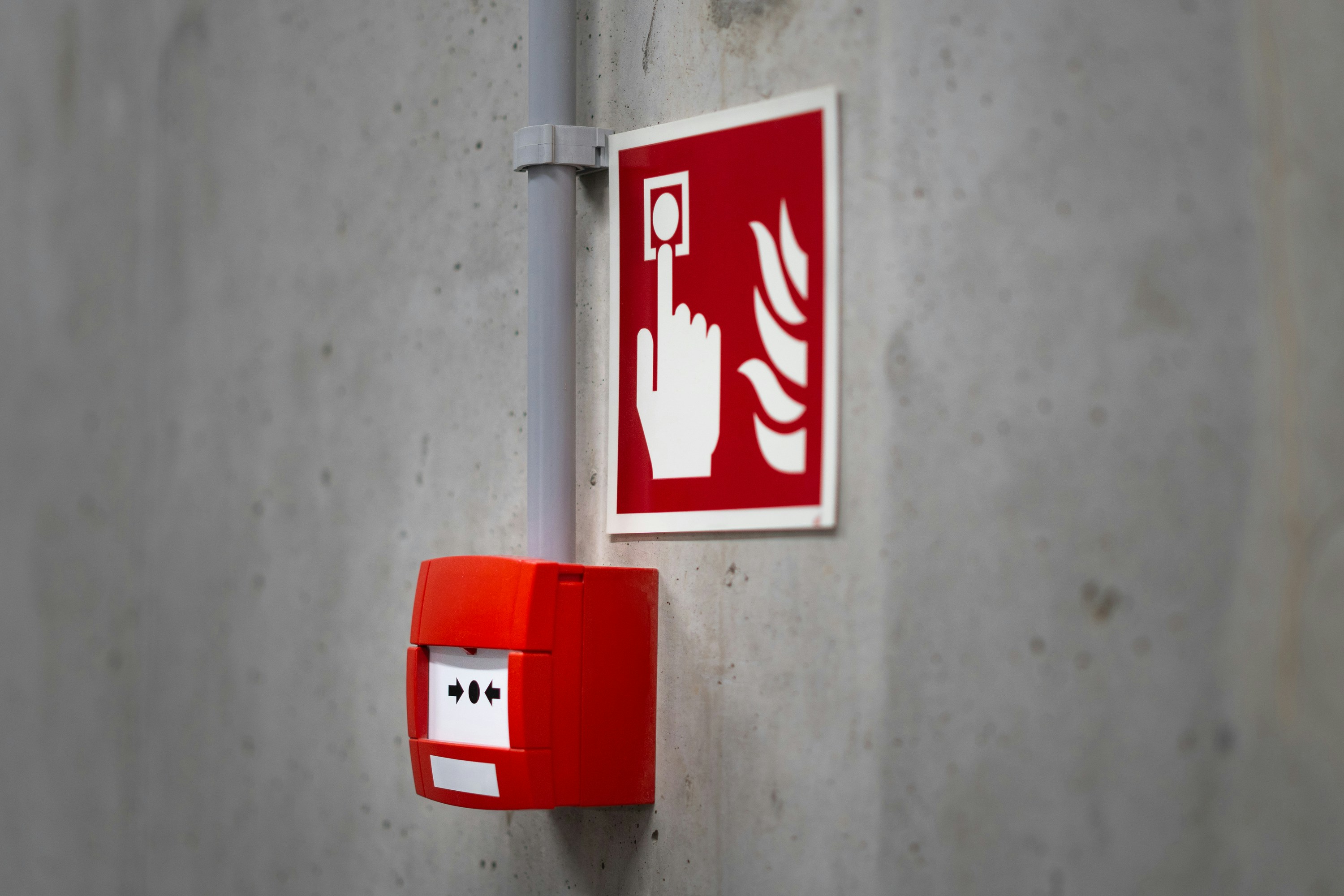
Fire alarm compliance is not just about having a system installed. For business owners, facilities managers and landlords, the system must be suitable, maintained, tested and capable of warning people clearly in an emergency. UK workplace fire safety guidance states that premises need appropriate fire detection and warning systems, and fire safety equipment must be properly installed, tested and maintained.
If your alarm is unreliable, poorly documented or no longer suited to your building, it may put people at risk and create compliance problems during a fire risk assessment or inspection.
The Quick Compliance Check For Busy Property Managers
Your fire alarm system may no longer be compliant if it has frequent faults, repeated false alarms, missing service records, poor audibility, outdated detectors, or has not been reviewed after changes to your building layout or occupancy.
A compliant system should be suitable for the current use of the premises, tested routinely, serviced by a competent engineer, and supported by clear records.
1. You Are Experiencing Frequent Fire Alarm Faults
Occasional faults can happen, but repeated issues should never be ignored.
Warning signs include:
Fault lights showing on the control panel
Detectors failing during tests
Sounders not activating correctly
Battery or power supply problems
Zones showing unexplained errors
A fault does not always mean the whole system has failed, but it does mean something needs investigation. Leaving faults unresolved can affect early warning and may raise questions during a fire risk assessment.
If your system regularly displays faults, it may be time to arrange professional fire alarm maintenance.
2. False Alarms Are Becoming Common
False alarms are more than an inconvenience. They disrupt staff, customers, tenants and operations. They can also point to deeper issues with system design, detector placement or maintenance.
Common causes include:
Dust or steam triggering smoke detectors
Detectors placed too close to kitchens or production areas
Poorly maintained sensors
Building layout changes affecting system performance
Old or unsuitable equipment
In commercial environments, repeated false alarms can lead to alarm fatigue. People may begin to treat alarms as routine rather than urgent, which creates a serious safety risk.
A competent engineer can assess whether detectors need cleaning, replacing, repositioning or upgrading.
3. Your Fire Alarm Records Are Missing Or Incomplete
Fire alarm compliance depends heavily on evidence.
You should be able to show:
Weekly test records
Professional servicing reports
Fault reports and remedial actions
Commissioning documents
Any changes made to the system
Fire risk assessment findings linked to alarm provision
If records are missing, you may struggle to demonstrate that the system has been maintained correctly.
The responsible person must manage fire safety duties and keep risk assessments up to date. UK Government guidance explains that fire risk assessments are a key duty for business and non-domestic premises.
For a deeper explanation of testing routines, read our guide on how often fire alarms should be tested in the UK.
4. The Building Has Changed Since The System Was Installed
Your fire alarm system was designed for a specific building layout and use. If the premises have changed, the system may no longer provide suitable coverage.
You should review your alarm system after:
Office refurbishments
New partition walls
Building extensions
Changes in occupancy
New machinery or processes
Change from office to retail, hospitality or warehouse use
Increased public access
New sleeping risk in residential or mixed-use premises
A system that was suitable five years ago may not be suitable today. HSE guidance highlights the importance of reviewing and updating fire risk assessments regularly, especially where risks change.
This is where a commercial fire safety review can help identify whether your alarm provision still matches the building.
5. Servicing Has Been Missed Or Delayed
Fire alarm servicing is not the same as weekly testing. Weekly tests help confirm basic activation. Professional servicing checks the wider system, including detectors, sounders, call points, control panels, batteries and fault history.
For commercial premises, fire alarm servicing is typically carried out at least every six months by a competent engineer, in line with BS5839-1 expectations. The Fire Industry Association has also highlighted the continuing importance of correct maintenance and documentation under updated BS 5839-1 guidance.
Missed servicing can lead to:
Undetected faults
Poor alarm performance
Incomplete compliance records
Increased false alarm risk
Problems during audits or inspections
If you cannot confirm when your system was last serviced, treat that as a warning sign.
Why Fire Alarm Compliance Matters
A fire alarm system has one essential purpose: to warn people early enough to escape safely.
Compliance is not about paperwork alone. It affects:
Life safety
Legal responsibility
Insurance confidence
Business continuity
Staff and tenant reassurance
Fire risk assessment outcomes
The Regulatory Reform (Fire Safety) Order 2005 places duties around fire precautions, including fire detection, emergency routes and maintenance.
For businesses and landlords, keeping systems maintained is one of the clearest ways to show that fire safety is being taken seriously.
What To Do If You Spot One Of These Warning Signs
If you notice one issue, start by checking your fire safety logbook, recent service reports and control panel history.
A sensible next step is to ask:
When was the system last professionally serviced?
Are weekly tests being recorded?
Have any faults been left unresolved?
Has the building layout changed?
Are false alarms becoming more common?
Does the current fire risk assessment mention the alarm system?
If the answer to any of these is unclear, arrange a professional inspection before the issue becomes more serious.
Frequently Asked Questions
How Often Should A Commercial Fire Alarm Be Serviced?
Does A False Alarm Mean My System Is Non-Compliant?
Who Is Responsible For Fire Alarm Compliance?
Do I Need A Fire Risk Assessment If I Already Have A Fire Alarm?
Can An Old Fire Alarm System Still Be Compliant?
Keep Your Fire Alarm System Reliable & Compliant
If your fire alarm system is showing faults, causing repeated false alarms or has not been serviced recently, it is worth taking action before it becomes a bigger compliance issue.
AMG Fire Solutions Ltd helps businesses, landlords and facilities managers with fire alarm installation and maintenance, as well as wider fire safety support across commercial premises.
For advice on your current system, arrange a professional review through our fire alarm services.
Call us on 01743 664 551
Email: brendanalton@amg-firesolutions.co.uk
Or fill out our contact form and we’ll be in touch promptly.